Welcome to Integrative Analysis Edinburgh

Integrative Analysis: Behavioural, Philosophical, Psychological, Existential and Hypnoanalysis

Experience & Background in Integrative Analysis

Welcome, and thank you for visiting Integrative Analysis Edinburgh

I have been working in the profession since 1993, when I initially trained in Analysis, Clinical Hypnosis and Stress Management. This led to an externally accredited Diploma, in turn recognised for UK "right touch" voluntary regulation through a PSA Accredited Register. I then completed further similarly recognised accreditation in Counselling, Clinical Psychotherapy and Hypnotherapy (including psychological analysis and CBT). I have completed a wealth of trainings over the years including BSc(Hons) IIT specialising in systems analysis and human resources, BA(Hons) Psychology & Philosophy of the Mind, MSc Psychology specialising in Identity and Neurology, Post Grad Eq (lvl7) Complex Trauma Clinical Treatment, Post Grad Eq (lvl7) Child Development Psy - ABA, Post Grad Eq (lvl7) Counselling & Psychotherapy. I have Professional Clinical Certifications in Trauma, Complex trauma, Advanced Grief therapy, Mindfulness, ACT, DBT, RO-DBT, Parts Work, Somatic Therapy, Functional Medicine for Trauma, Depression, Mood Disorders, Anxiety, Anger. Most recently I have been studying Philosophy & Psychology at Cambridge University (PACE), Psychology and related at Oxford University (OLL), and Philosophy & Humanities with the Open University.
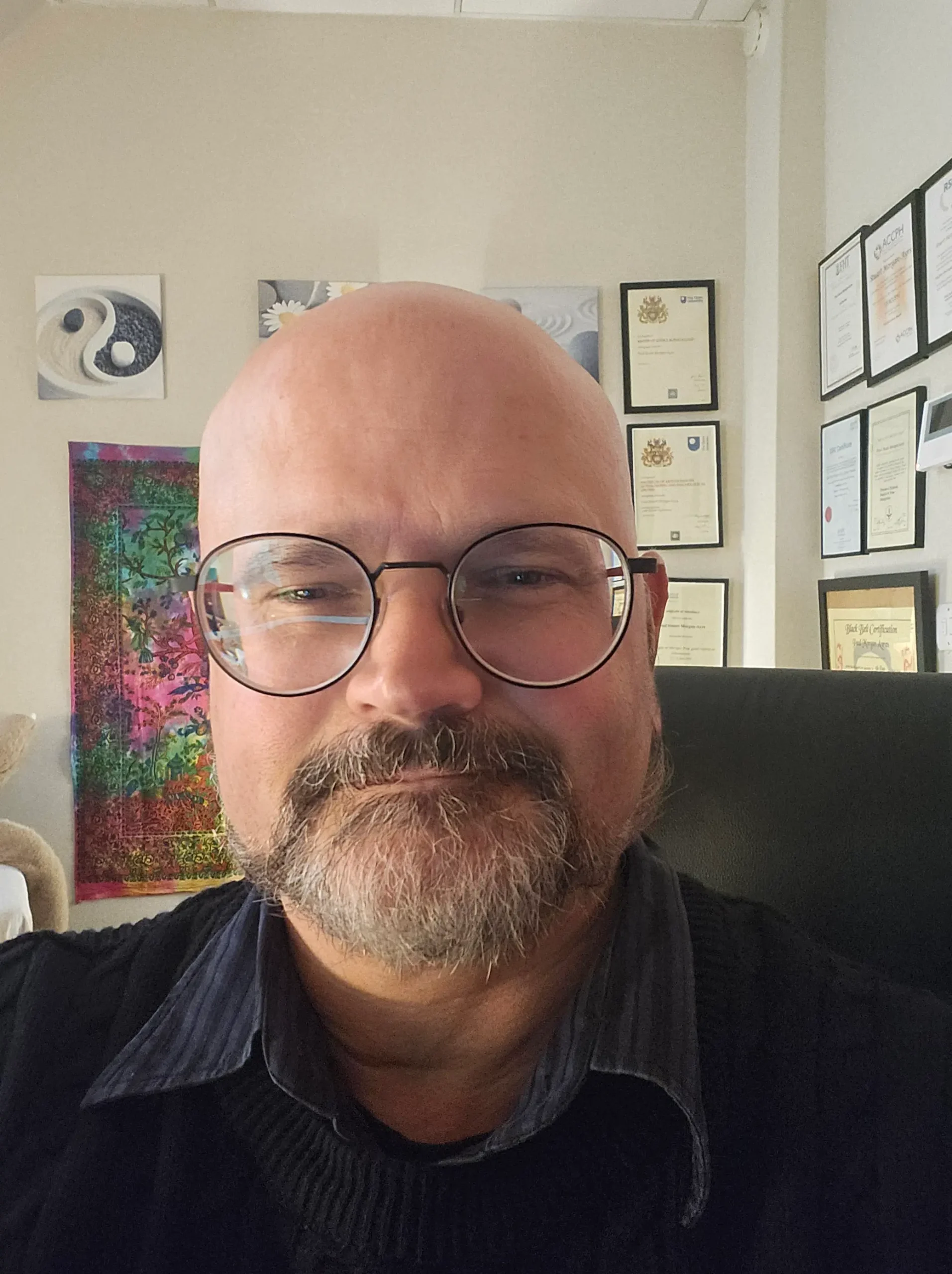
Portrait of Stuart Morgan-Ayrs with framed certificates on the wall behind him.

Clinical Interests, Experience and Training

My major interests throughout my career have been in analytic methods (behavioural, philosophical, existential, psychological and hypnoanalytic) and working with both Complex Trauma and personal development. With both I believe in looking deeper than surface diagnosis, and I favour a transdiagnostic, while being clinically certified in evidence based clinical approaches. I thus combine pragmatic clinical methods and a deeper philosophical and holistic overall approach, including the "gold standard" Three-stage trauma therapy clinical approach for Complex and Developmental Trauma. I am a trauma survivor myself and therefore this is an area of deep and real personal interest, and to this end I have completed multiple certifications and post graduate trainings including studying with some of the top therapists in the industry (including Bessel Van Der Kolk, Peter Levine, Stephen Porges, Gabor Mate, Janina Fischer, Dan Siegel). I am also certified in ND (neuro diverse / divergent) client therapy and I personally have Dyslexia, ASD and ADHD traits.

Therapeutic Approach and Philosophy

My driving passion in therapy is to look at the deeper patterns in order to elicit real, lasting change. My approach is transdiagnostic (looks deeper than surface typical diagnosis) and Salutogenic (what does "healthy/ well" look like for you?). I particularly enjoy using philosophical and existential based analysis with psychological analysis for deeper meaning, and then reinforcing change with behavioural and or hypnoanalytic processes. (Philosophy was the main science for mental wellbeing before the separate discipline of psychology emerged, and goes back thousands of years). Humour is used extensively in session in line with methods used in multiple therapy models (including RO-DBT, Trauma therapy, Polyvagal based therapy, Compassionate Enquiry). Humour has traditional and modern science based therapeutic properties including titration, rupture and repair training, reframing and regulation effect.

Fees & Availability

Sessions are 55 mins long (the standard therapy "hour"). Sessions are booked on a retainer basis, in other words in general you are liable for your fortnightly sessions whether or not you attend, with exceptions for pre-arranged absence and acute illness. Full terms and conditions and up to date rates are provided together with a screening form before any sessions are booked or any fees asked for. Only when you are clear that you wish to proceed, have plenty of information to make informed consent, and you have completed screening for clinical appropriateness for the service, is any commitment entered into.

My Location

I work from Central Edinburgh and see clients from across the Edinburgh Central Belt, including Glasgow, Falkirk, Midlothian and the Lothians, as well as the surrounding areas. I will provide full location details when we arrange our sessions, the clinic is on major public transport routes in Edinburgh City Centre.

In addition to face-to-face therapy, I also offer online sessions for clients across the UK and beyond via Google Meet. Contact me to find out more about how online therapy works.

Get in touch

Feel free to contact me if you have any questions about how psychoanalytic psychotherapy works, or to arrange an initial assessment appointment. This enables us to discuss the reasons you are thinking of coming to therapy, whether it could be helpful for you and whether I am the right therapist to help.


I am happy to discuss any queries or questions you may have prior to arranging an initial appointment.

All enquires are usually answered within 24 hours, and all contact is strictly confidential and uses secure phone and email services.

Some frequently asked questions

Difference between therapy and counselling?

Counselling is a formal conversation for non clinical issues (strictly speaking where no serious diagnosis exists), and although it is often called a “talking therapy”, it is not actually a “treatment” or “therapy”, but merely a structured conversation method. Psychological therapies or psychotherapies, including forms of analysis are provided by clinically trained therapists for cases where diagnosis may apply from medical or psychiatric professionals. Although the ethos may be trans-diagnostic, the analyst or therapist is trained in research evidenced clinical methods as recommended by NICE. (Confusion in the industry occurred when in 1999 counsellors voted to begin calling themselves psychotherapists). Please note: private therapists in the UK can not “diagnose” mental health conditions. Stuart is NOT a medical doctor.

Will everything said be kept confidential?

Usually the conversations and any notes are indeed confidential. However there are legal and ethical restrictions for all therapists. In the event of a person (or animal) being at risk of harm, if a serious criminal offence is involved, or in child protection and safeguarding matters, the therapist may be legally obliged to take appropriate action informing authorities. Also in the event of a court order or other legal warrant notes may be obtained by police or a court. Therapists may also be called as witnesses. In the event of a complaint, information including summaries and notes are shared with legal representatives and adjudicating bodies. As a matter of course partial details are shared in clinical supervision, although effort is made to ensure the client / patient has their identity protected unless the above apply.

Can I bring a friend or relative with me to the session?

I only work with legal adults who are sufficiently self sufficient to attend alone. If you are vulnerable to the extent that you feel you need to be accompanied to therapy, then private therapy may not be the best option for you. You should seek referral to community mental health services, who can provide a more wrap around supportive service.

How long will I need analytic or psychological therapy?

By it’s nature integrative analysis is for long term issues, usually caused by developmental issues such as attachment issues, complex trauma and other deep rooted issues. These are not issues that lend themselves to rapid treatment. You should be prepared for a commitment of 6 months +, usually running into several years. If you do not think your issues are serious enough to warrant long term work, then you might consider seeking a counsellor or cognitive behavioural psychotherapist for shorter term resolution instead. Sessions are fortnightly on a retainer basis (with emergency exceptions and preplanned holiday exceptions you are liable for your sessions whether you attend or not).

How long will I need to wait for an appointment?

I aim to answer your enquiry within 48 hours in the working week. I will let you know from the start if there are vacancies in the diary. If there are, you will be provided comprehensive information and a link to online screening & assessment forms. These will assess general mental wellbeing (CORE-10) and anxiety (GAD-7) levels and gather other vital information to ascertain whether the service is likely to be a good match for your clinical needs. You will not be asked to pay any fees, or make any commitment until this screening has been completed. You will then be informed of the outcome and if appropriate offered the vacancies that are available. All data is held securely and we are ICO data registered.

What are the most common underlying or deeper issues addressed?

Although the approach is trans-diagnostic (looks at the whole person, not just diagnosis) and salutogenic (focused on what wellbeing for you would look like) there are common underpinning issues. These commonly include attachment issues, child sexual abuse, adverse childhood experiences, domestic violence or gaslighting, developmental trauma, complex trauma, childhood immersion in a cult, codependent relationships, manipulative relationships, long term struggle with depression or anxiety. All cases with an underpinning diagnosis are addressed using good practice from NICE guidelines and research evidenced methods.

What is your job title or registration?

Stuart is an analyst, a clinical hypnotherapist and a traumatic stress specialist. These are Stuart's job titles. He is also trained and qualified in job functions that include counselling, complementary health, psychotherapy, mindfulness and a range of related areas.

Are you a psychoanalyst?

The term “psychoanalyst” is disputed. Freudians like to lay claim to the term as belonging to accredited Freudian style analytic training. Others point out it is merely a grammatical contractual of psychological analyst. Either way Stuart is trained in a wide range of analytic styles rather than just one (such as Freudian) and these include Behavioural, Cognitive Behavioural, Existential, Philosophical, Hypno-analytic, Mindful, Linguistic, Systemic and Psychological. Therefore the job title of “psychoanalyst” is avoided since it does not cover the far wider range of methods. Instead Integrative analyst is used.

What standards are adhered to for client protection?

All therapies incorporated in integrative therapy and analysis have been trained in by Stuart to appropriate levels of competency through to specialist levels and  are subject to registration and are fully insured. Core therapy models have been trained in to graduate and post graduate levels. Key issues such as trauma, depression, anxiety, anger, grief, ASD, ADHD, OCD and mood disorders have been also trained in to Certified Specialist levels (post graduate, post qualification). Stuart is subject to vigorous ethical standards through professional registrations at senior levels, and through registration on Professional Standards Authority Accredited Register(s). His main PSA AR registration (CNHC under hypnotherapy) also ensures ethical conduct in all other therapies provided. Stuart has regular clinical supervision, peer supervision and ongoing CPD (continuous professional development) including from industry specialists and leading universities.